The Ground of Japanese Beauty: Unveiling the Enigma
The Japanese sense of beauty, as actualized in innumerable works of art has frequently been characterized as elusive, mysterious, or even esoteric when viewed through the lens of Western aesthetic frameworks. As Izutsu writes, this perception arises not merely from differences in artistic forms or cultural traditions, but from the presence of “a peculiar kind of metaphysics” that pervades and determines the entire functional structure of beauty in Japanese classical aesthetics. Without grasping this underlying metaphysical structure, the so-called “mystery” of Japanese beauty remains impenetrable, suspended in ambiguity.
At the heart of Izutsu’s argument is the idea that Japanese aesthetics is not merely an external perception of form, color, or harmony, but a manifestation of an inner metaphysical vision of reality -a mode of seeing that is simultaneously contemplative, poetic, and non-dualistic. This vision is not grounded in a subject-object dichotomy but is instead based on an intuitive interpenetration of things -a world experienced as one dynamic, living Whole. In this framework, beauty is not applied to things; rather, it emerges from the mode of their being, when revealed in the proper light of contemplative awareness.
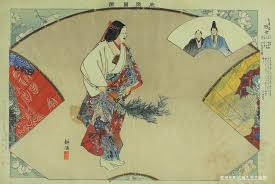
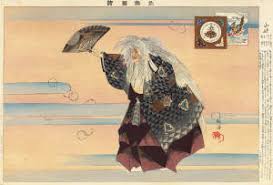
This metaphysical ground is most clearly articulated in Izutsu’s concept of the non-articulated Whole, an ontological field prior to conceptual fragmentation. Classical Japanese art forms -from waka and haiku to Noh and the chadō- are not constructed upon representational ideals but seek instead to disclose a moment of unity between human consciousness and the inner essence of things. Beauty, in this context, arises through a silent, intuitive grasp of the suchness of phenomena -what Izutsu calls the “invisible depth-structure” behind surface appearances.
To the Western aesthetic mind, trained in dualistic metaphysics and analytical categories, this experience may appear enigmatic. Western aesthetics, from Plato to Kant, often begins by distinguishing the perceiver from the perceived, and beauty is typically defined as a quality judged by reason, proportion, or form. Japanese aesthetics, in contrast, does not isolate beauty as a property to be analyzed, but rather participates in it, by attuning the self to the movement of ma (the in-between), yūgen (mysterious profundity), and shizen (naturalness).
The sense of yūgen is particularly emblematic of this metaphysical orientation. It is not a term that designates a specific beauty or emotion but points toward a depth that cannot be fully expressed, something that resonates through the veil of silence, shadow, or evanescence. As Izutsu notes, yūgen corresponds to a metaphysical depth in which the articulated (what is seen, said, expressed) only hints at the non-articulated (the hidden, the ineffable). A haiku, with its brevity and openness, is not merely minimal; it is metaphysically charged -it leaves space for the reader’s consciousness to merge with the poem, to intuitively grasp the infinite through the finite.
In this light, the Japanese sense of beauty may indeed seem “strange” or “remote” to those whose aesthetic judgments rely on clarity, completion, and defined meaning. For the Japanese tradition, influenced by Zen and Daoist currents, the greatest beauty often lies in incompleteness, asymmetry, and transience -principles evident in concepts such as wabi and sabi. These are not simply styles; they reflect an ontology in which all things are in flux, and beauty lies precisely in the ephemeral, the withered, or the imperfect. As Izutsu writes, this is not a passive acceptance of imperfection, but an active metaphysical seeing -one that recognizes the presence of Being (yū) through the very appearance of Nothingness (mu).
Thus, what seems enigmatic in Japanese beauty is not mystery for mystery’s sake, but a reflection of a radically different mode of perception -one rooted in inner contemplation, poetic awareness, and non-dual metaphysics. Beauty is not outside the thing, nor inside the self; it is the moment of contact between the two, a kokoro-resonance, a luminous opening into the ground of being. This is the essential insight Izutsu provides: that the aesthetic in classical Japan cannot be separated from the metaphysical, and that the so-called “mystery” only dissolves when one has entered the same contemplative field from which the art itself arises.
To understand Japanese aesthetics, then, is not merely to study its forms, but to re-orient consciousness—to become attuned to the rhythm of things, to the stillness between sounds, to the light that reveals by shadow. Only in such a state does one begin to see that what was once foreign or esoteric is, in truth, a luminous unfolding of a metaphysical vision -subtle, silent, and profound.