


Japanese Sense of Beauty-Chapter I
This first chapter serves as the essential groundwork, establishing the metaphysical axioms from which the entire edifice of classical Japanese aesthetics arises.
This first chapter serves as the essential groundwork, establishing the metaphysical axioms from which the entire edifice of classical Japanese aesthetics arises.
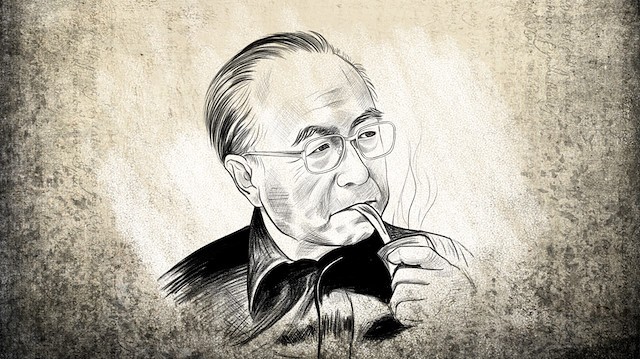
Synopsys: To enter the intellectual landscape of Izutsu’s The Theory of Beauty is to undergo a fundamental reorientation of one’s philosophical bearings. This first chapter serves as the essential groundwork, establishing the metaphysical axioms from which the entire edifice of classical Japanese aesthetics arises. The core argument posits that the Japanese sense of beauty is not a peripheral or subjective judgment, but a mode of ontological disclosure rooted in a non -dualistic worldview. The Western tradition, from Plato to Kant, has largely treated beauty as a property to be discerned by a subject in an object, a formulation that presupposes a fundamental cleavage between the perceiver and the perceived. Izutsu’s analysis, by contrast, reveals a reality where this dichotomy is illusory. Here, beauty emerges from a resonant field he terms the “non -articulated Whole”—a primordial, undifferentiated unity prior to conceptual fragmentation.
Within this framework, key terms undergo a profound semantic shift. Consciousness (Ishiki) is reconfigured from a Cartesian thinking substance to a cosmic, articulativ function; it is the medium through which Being itself comes into appearance. The heart-mind (Kokoro) is not a repository of personal emotion but the dynamic, impersonal centre where feeling, thought, and perception coalesce into a resonant openness to the world. This worldview is further structured by the dynamic interplay of Yū (Being) and Mu (Nothingness), where Mu is not a nihilistic void but the fecund, non -articulated ground from which all phenomenal reality (Yū) momentarily crystallizes. The experience of beauty, therefore, is the event wherein this ground becomes luminou sly transparent through a form—a cherry blossom, a line of poetry—without that form ever severing its connection to the silent Whole from which it came. This chapter, therefore, does not merely list concepts; it constructs the ontological stage upon which the drama of Japanese art will be performed.


