Noh Theatre-Chapter IV
Noh Theatre
Noh Theatre
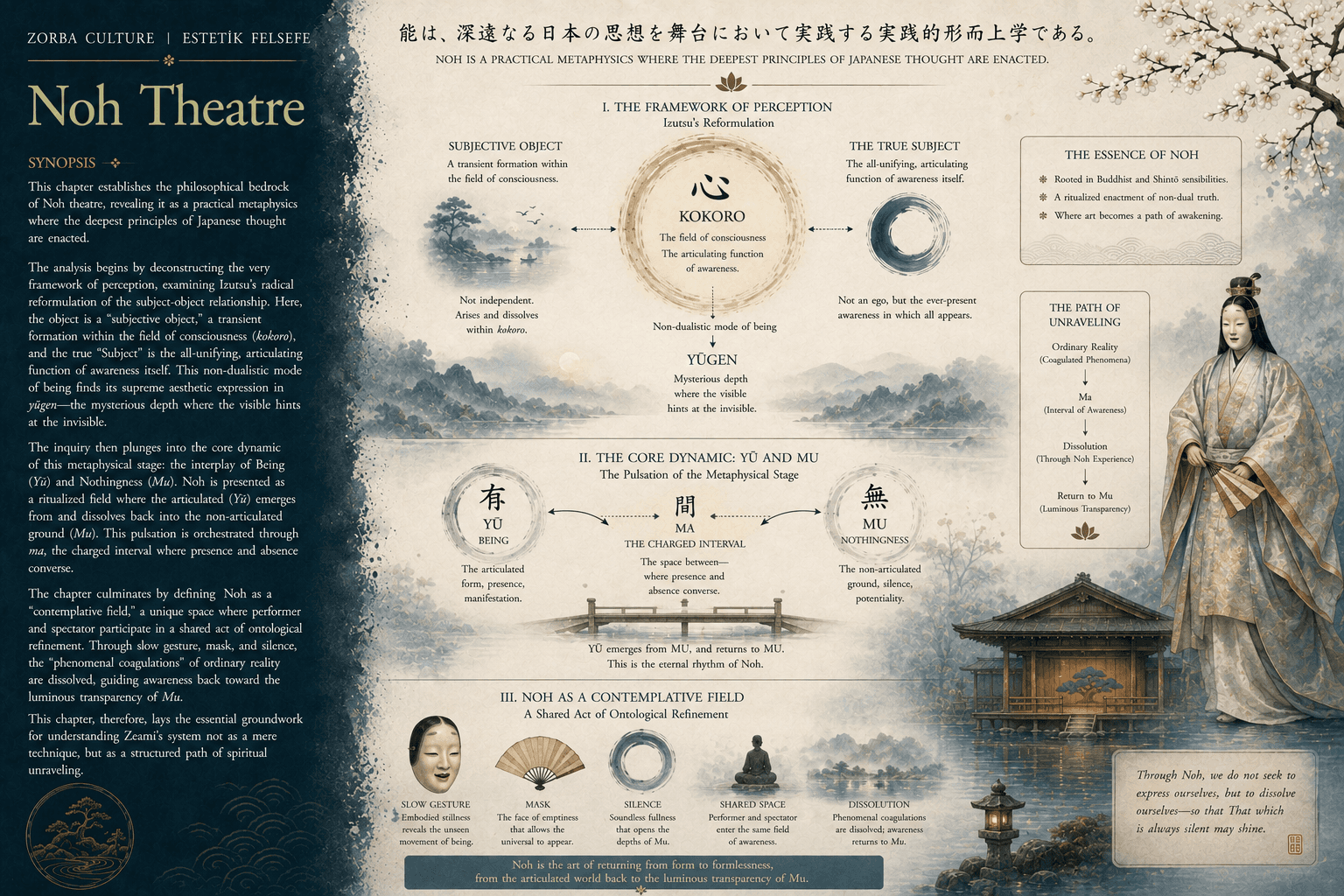
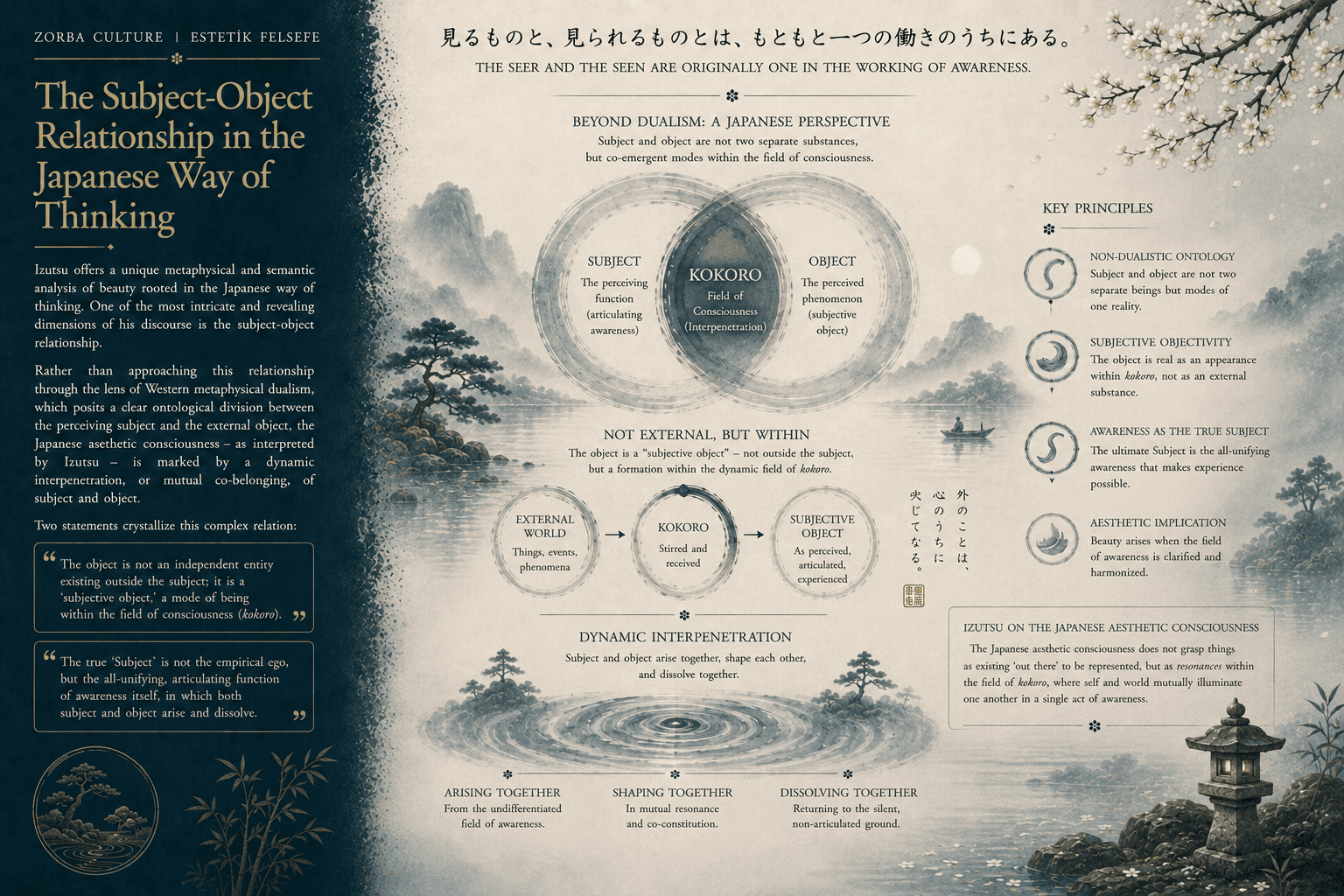
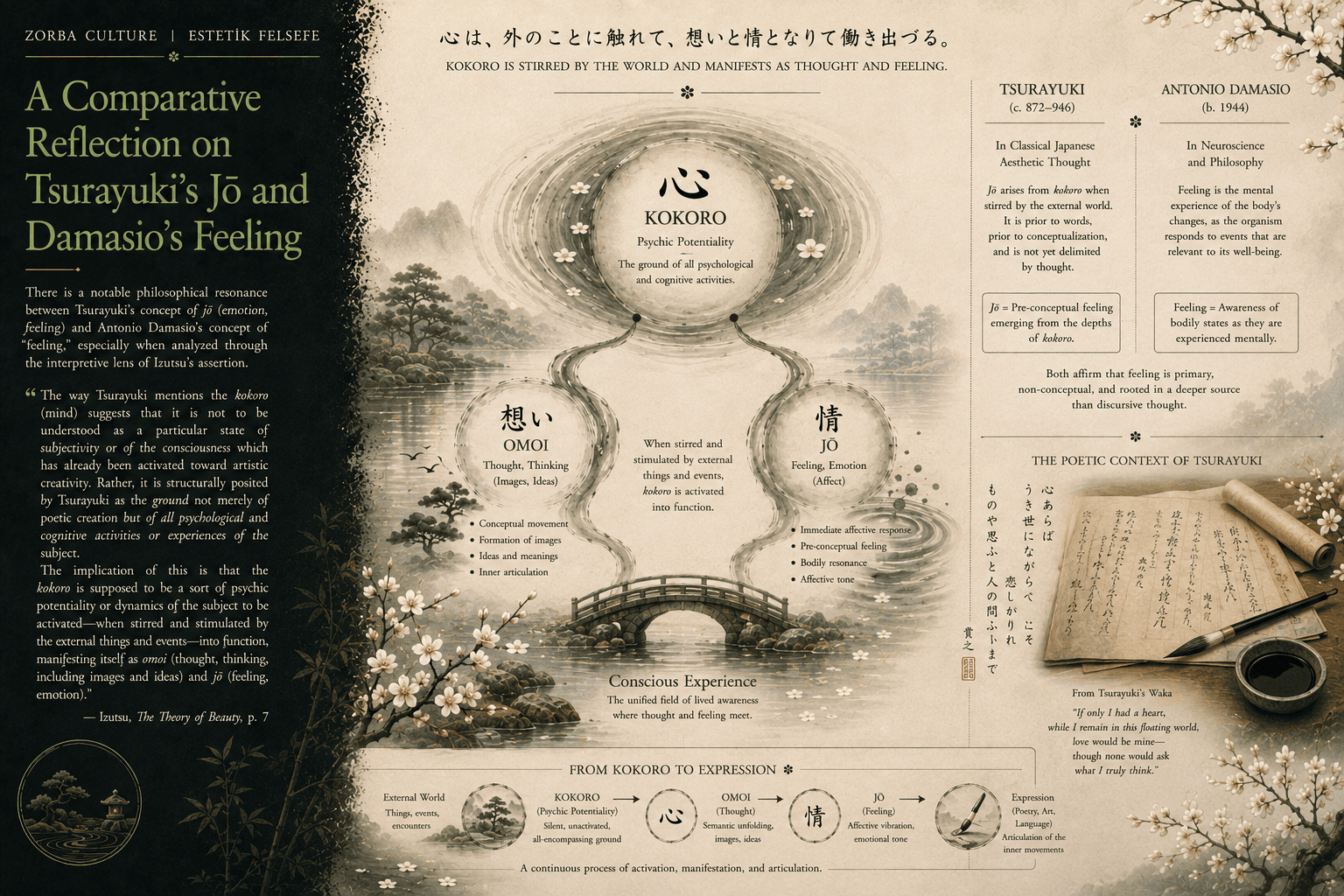
Synopsis: This chapter establishes the philosophical bedrock of Noh theatre, revealing it as a practical metaphysics where the deepest principles of Japanese thought are enacted. The analysis begins by deconstructing the very framework of perception, examining Izutsu's radical reformulation of the subject-object relationship. Here, the object is a "subjective object," a transient formation within the field of consciousness (kokoro), and the true "Subject" is the all-unifying, articulating function of awareness itself. This non-dualistic mode of being finds its supreme aesthetic expression in yūgen—the mysterious depth where the visible hints at the invisible.
The inquiry then plunges into the core dynamic of this metaphysical stage: the interplay of Being (Yū) and Nothingness (Mu). Noh is presented as a ritualized field where the articulated (Yū) emerges from and dissolves back into the non-articulated ground (Mu). This pulsation is orchestrated through ma, the charged interval where presence and absence converse. The chapter culminates by defining Noh as a "contemplative field," a unique space where performer and spectator participate in a shared act of ontological refinement. Through slow gesture, mask, and silence, the "phenomenal coagulations" of ordinary reality are dissolved, guiding awareness back toward the luminous transparency of Mu. This chapter, therefore, lays the essential groundwork for understanding Zeami's system not as a mere technique, but as a structured path of spiritual unraveling.