Phenomenal Articulation and Linguistic Articulation in the Metaphysical Aesthetics of Izutsu
Phenomenal articulation refers to the way in which consciousness delineates, differentiates, and brings into form the world as lived and perceived.
Phenomenal articulation refers to the way in which consciousness delineates, differentiates, and brings into form the world as lived and perceived.
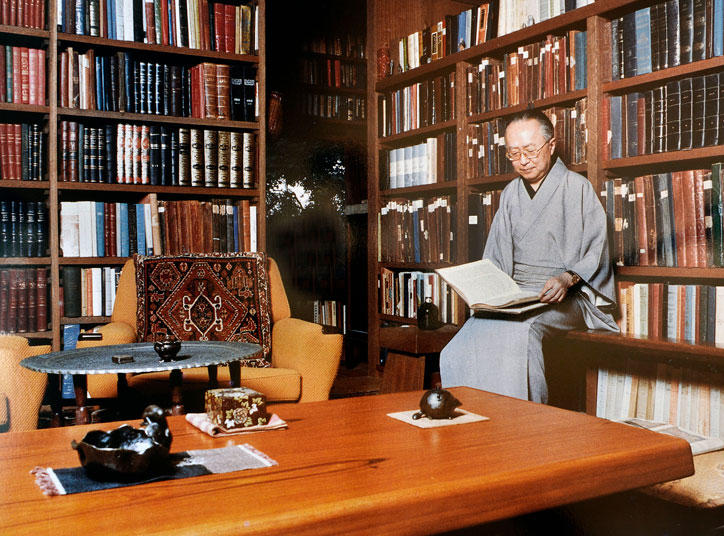
Phenomenal articulation refers to the way in which consciousness delineates, differentiates, and brings into form the world as lived and perceived. For Izutsu, this process is not merely a cognitive abstraction but a metaphysical act of rendering Being into appearance. It is the unfolding of the world from the non-articulated whole—a state of undifferentiated, pre-conceptual unity—into a field of discrete, relationally situated phenomena.
This articulation, however, is not fragmentation in the Western sense of objectifying analysis. Rather, it is an emanative differentiation, where each phenomenon carries within it the trace of the Whole. Izutsu draws on the Japanese aesthetic principle of yūgen—the mysterious depth and subtle evocativeness of things—as the hallmark of this mode of articulation. In yūgen, the seen is always tied to the unseen; the articulated is a doorway into the non-articulated. The cherry blossom, for instance, is not simply a discrete object in the phenomenal field—it is a portal into the eternal, the fleeting, the empty, and the real (genjitsu). This makes phenomenal articulation in Japanese aesthetics a poetic operation of the kokoro—the heart-mind as the axis of perception, feeling, and intuition.
Linguistic articulation, in Izutsu’s framework, is not reducible to semantic representation or symbolic communication. It is a metaphysical gesture that seeks to mirror or gesture toward the inner structure of reality as phenomenally experienced. In classical Japanese aesthetics, especially in poetry (waka, haiku) and Noh, linguistic expression is not meant to define or explain the world but to suggest it, hint at it, and allow it to resound within the interiority of the listener.
Izutsu identifies this function of language with the aesthetics of kotoba (word) and koto (event or thing). Language in this context is not the imposition of fixed meaning but a means of disclosing the inner resonance of phenomena. A haiku such as Bashō’s:
An old pond
A frog leaps in,
The sound of water.
Here, the words do not explain the scene -they articulate it in such a way that the unspoken is made felt. The linguistic expression becomes an opening into the vast, silent field of the non-articulated. Izutsu would say that such a poem is an act of ontological pointing: it returns language to its original metaphysical function, which is to gesture toward what lies beyond articulation itself.
The profound aesthetic power of Japanese classical forms, according to Izutsu, lies precisely in the harmony between phenomenal and linguistic articulation. Phenomenal articulation gives rise to a world of delicate appearances, already imbued with the depth of the non-articulated Whole. Linguistic articulation, in turn, must resonate with this structure—neither overstating nor distorting it, but tracing its contours with precision and humility.
This interplay is governed by the principle of ma -the interval, pause, or gap- which Izutsu sees as a metaphysical principle of spacing. Ma is the silence between sounds, the empty space within a painting, the pause in a Noh performance. It is the non-articulated dimension within articulation itself. Both phenomenal and linguistic articulations are structured around this metaphysical spacing, which allows the infinite to breathe through the finite.
In Zeami’s Noh aesthetics, this interplay becomes particularly evident. The actor’s movement (kata) is a phenomenally articulated form, yet it is never expressive in the Western theatrical sense. It is minimal, restrained, and internally charged with the energy of yūgen. The spoken lines—poetic and allusive—never narrate but evoke. Language and gesture co-articulate a world that remains fundamentally ineffable, a world that must be entered not through understanding but through attunement.
Ultimately, for Izutsu, both phenomenal and linguistic articulation are operations of consciousness (ishiki) in its metaphysical function. They are not subjective impositions but modes of revealing Being. This revealing is not arbitrary—it is governed by the structure of the “whole structure” of reality, which consciousness intuits and reflects in symbolic form.
Thus, the aesthetics of articulation in Japanese tradition are not about constructing beauty but disclosing it—allowing it to appear as it is, subtly and suggestively, through the correct balance of phenomenal perception and linguistic trace. This is why mono no aware, wabi, and sabi are not simply aesthetic tastes but modes of attunement to the essential rhythm of the world—a rhythm that articulation must follow without disrupting.
The interplay between phenomenal and linguistic articulation in the classical aesthetics of Japan, as elucidated by Izutsu, reveals a profound metaphysical structure wherein beauty arises not as a property but as an event of disclosure. Phenomenal articulation brings forth the world as an articulated Whole; linguistic articulation echoes and preserves its subtle resonances without collapsing them into fixed meanings. Their interplay, guided by silence (ma), depth (yūgen), and consciousness (ishiki), constitutes a vision of beauty that is at once metaphysical and poetic. In this vision, the task of the artist, poet, or contemplative is not to invent beauty but to become its faithful articulator—one who listens to the world’s silent language and speaks it anew, with reverence and restraint.
Beauty, in the Japanese tradition, is not a matter of perception alone, but a mode of attunement—a way of being-with the world in its vanishing. To speak of beauty, then, is already to imply a certain logic of awareness: one in which thought does not impose upon reality, but resonates within it. The aesthetic is thus inseparable from the cognitive, and the Japanese sense of beauty quietly opens onto a deeper orientation of thought—where to think is not to separate, but to feel one’s way within the whole.