Reality as Symbol and Substance: Izutsu, Descartes, and Spinoza
The nature of reality is not merely a metaphysical question but one that encompasses aesthetics, epistemology, and existential orientation.
The nature of reality is not merely a metaphysical question but one that encompasses aesthetics, epistemology, and existential orientation.

The nature of reality is not merely a metaphysical question but one that encompasses aesthetics, epistemology, and existential orientation. Philosophers across cultures have asked: What is real? How do we relate to it? And what modes of being or knowing are most attuned to it? This work explores three distinctive visions of reality: Izutsu’s symbolic-aesthetic ontology as presented in The Theory of Beauty in the Classical Aesthetics of Japan, René Descartes’ metaphysical dualism, and Baruch Spinoza’s rationalist monism. Each thinker articulates not only a different conception of reality but also a different way of being-in-the-world. Their frameworks reverberate through Eastern and Western traditions, shaping the contours of art, science, ethics, and spirituality.
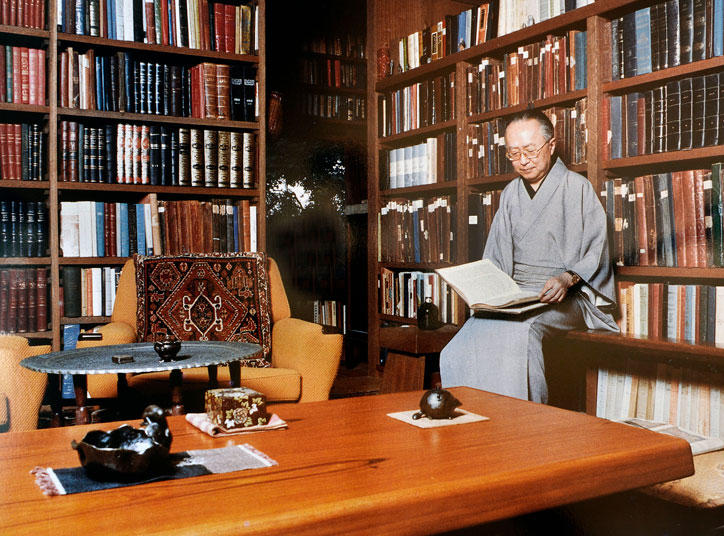
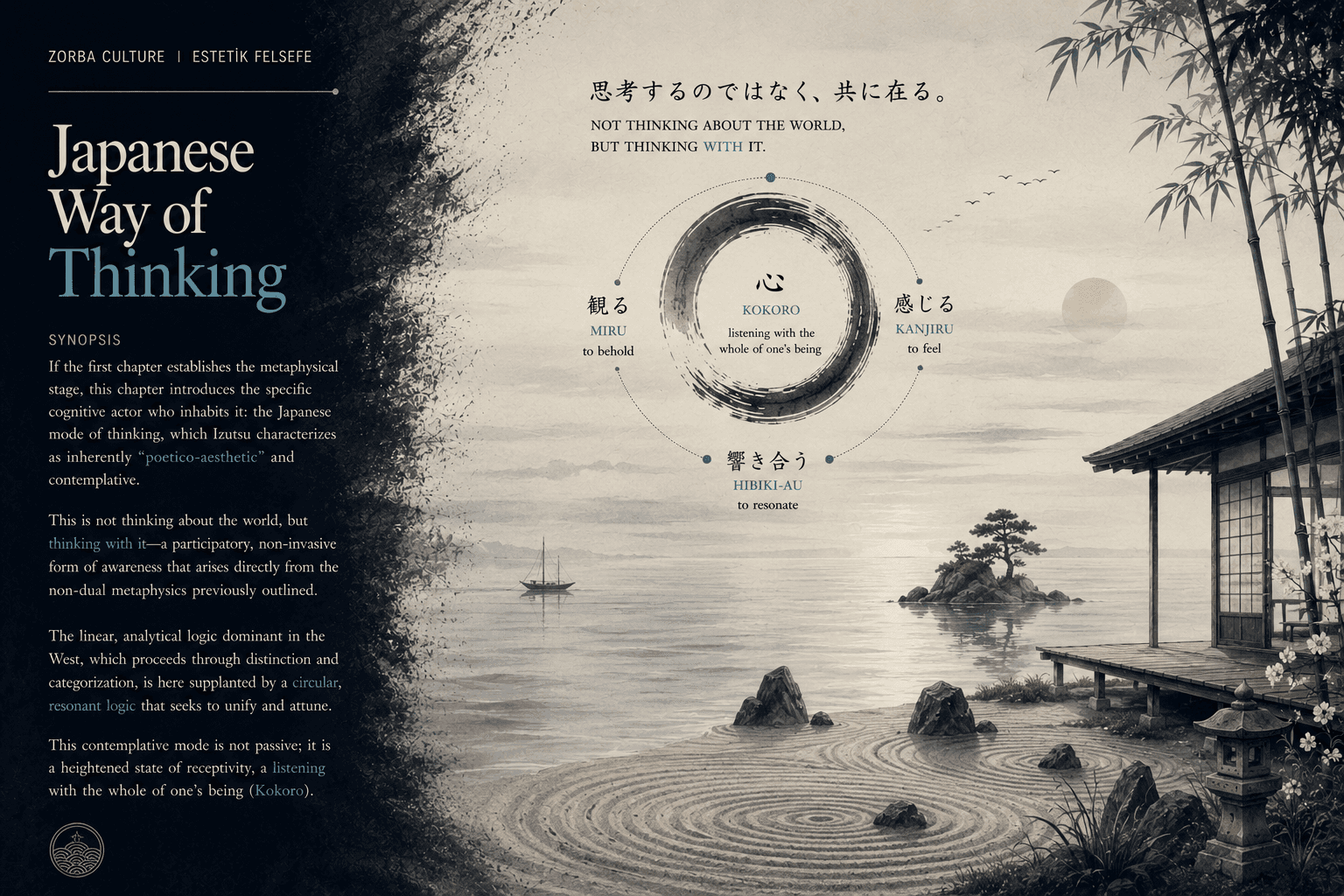
Izutsu, a scholar of Islamic philosophy, Zen Buddhism, and comparative philosophy, explores the Japanese conception of beauty not merely as a category of aesthetics but as an ontological principle. In The Theory of Beauty in the Classical Aesthetics of Japan, Izutsu interprets the Japanese worldview as fundamentally symbolic and aesthetic. Reality, in this view, is not bifurcated into substance and mind but is experienced as a unified, dynamic field of symbolic resonances.
Izutsu emphasizes that in the Japanese worldview, particularly as shaped by Zen Buddhism and Shinto, the boundary between subject and object, knower and known, is fluid. The aesthetic experience becomes a mode of knowing, where perception itself participates in the unfolding of being. Reality is not grasped through abstract rational categories, but intuited through lived, embodied sensitivity. Thus, beauty is ontological -a way reality reveals itself in its suchness.
In stark contrast, René Descartes’ metaphysics introduces a dualistic conception of reality, dividing it into res cogitans (thinking substance) and res extensa (extended substance). For Descartes, reality is composed of two fundamentally different kinds of substances: mind and body. This dualism laid the foundation for modern scientific materialism, privileging clear, distinct ideas and mathematical descriptions of physical processes, while casting subjective experience into the domain of the uncertain.
Descartes’ dualism was revolutionary in its emphasis on rational clarity and the autonomy of the subject, yet it also introduced a radical separation between inner consciousness and external reality. This created persistent problems in Western thought, including the so-called "mind-body problem," and the alienation of the human subject from the world -a theme heavily critiqued by later existentialists and phenomenologists.
Baruch Spinoza, responding partly to Cartesian dualism, proposed a radically different metaphysics: monism. In Ethics, Spinoza identifies God with Nature (Deus sive Natura), arguing that there is only one substance, which possesses infinite attributes. Mind and body are not separate substances but two attributes of the same reality. Everything that exists is a mode of this one substance, expressing the divine essence.
Spinoza’s view collapses the Cartesian dualism, offering a vision of reality as internally coherent, necessary, and rational. Unlike Izutsu’s aesthetic-symbolic ontology, however, Spinoza’s monism remains rationalist and logical, rooted in geometric demonstration and intellectual intuition. While both Izutsu and Spinoza reject dualism, their pathways differ: Spinoza through metaphysical necessity, Izutsu through aesthetic immediacy.
Descartes’ dualism has profoundly influenced Western thought, particularly in the development of empirical science, psychology, and analytic philosophy. The separation of subject and object enabled technological mastery and scientific rigor but also led to a disenchanted, mechanistic worldview. The Cartesian subject became isolated, rational, and autonomous -a hallmark of modern Western individualism.
Spinoza’s monism, while less influential in the short term, became a touchstone for later philosophers seeking to overcome alienation -most notably in German Idealism, Romanticism, and contemporary ecological thought. Spinoza's integration of mind and body presaged holistic paradigms that have recently resonated with systems theory and environmental ethics.
In contrast, Izutsu’s synthesis[1] of Japanese aesthetics reveals a worldview deeply embedded in impermanence, harmony, and intuitive unity. This perspective reflects the influence of Mahayana Buddhism, Taoism, and Shinto, where reality is seen as interdependent, processual, and fundamentally ineffable. Rather than mastering the world, Eastern traditions often emphasize attunement to its rhythms -a view echoed in Japanese arts, literature, and spiritual practice.
Interestingly, modern Western thinkers -particularly phenomenologists like Merleau-Ponty or Heidegger- have shown increasing interest in such non-dual, embodied conceptions of reality. Similarly, contemporary Eastern thinkers have engaged with Western rationalism and scientific thought, creating dialogues that seek integrative frameworks.
The comparative analysis of Izutsu, Descartes, and Spinoza reveals not only divergent metaphysical assumptions but also differing existential attitudes toward the world. Descartes' dualism posits a reality fractured between mind and matter, Spinoza’s monism presents a rational totality, and Izutsu’s aesthetic ontology offers a world revealed through symbolic resonance and intuitive insight. Each worldview has shaped its cultural context -whether through the rise of science and individualism in the West, or the cultivation of aesthetic sensibility and ontological harmony in the East. In our global, pluralistic age, these perspectives can serve as complementary lenses for reimagining reality --not as an object to master, but as a field of meaning to dwell within.
[1] In this work, the term “synthesis” is employed in a non-dialectical sense, denoting a harmonious integration, union, or convergence of elements without implying the notion of “thesis–antithesis–synthesis” as a resolution of “contradictions”. Rather than a linear progression toward overcoming dualities, “synthesis” here signifies a contemplative unity or confluence where-in distinctions remain dynamically interrelated without being subsumed or negated. This usage aligns with Zen and Japanese aesthetic principles that emphasize simultaneity, coexistence, and the vanishing of oppositional structures through attunement and presence, rather than their dialectical reconciliation.