Nishida Kitarō’s Topology as the Foundation of Izutsu Toshihiko’s Aesthetics
Nishida Kitarō’s Topology as the Foundation of Izutsu Toshihiko’s Aesthetics
Nishida Kitarō’s Topology as the Foundation of Izutsu Toshihiko’s Aesthetics

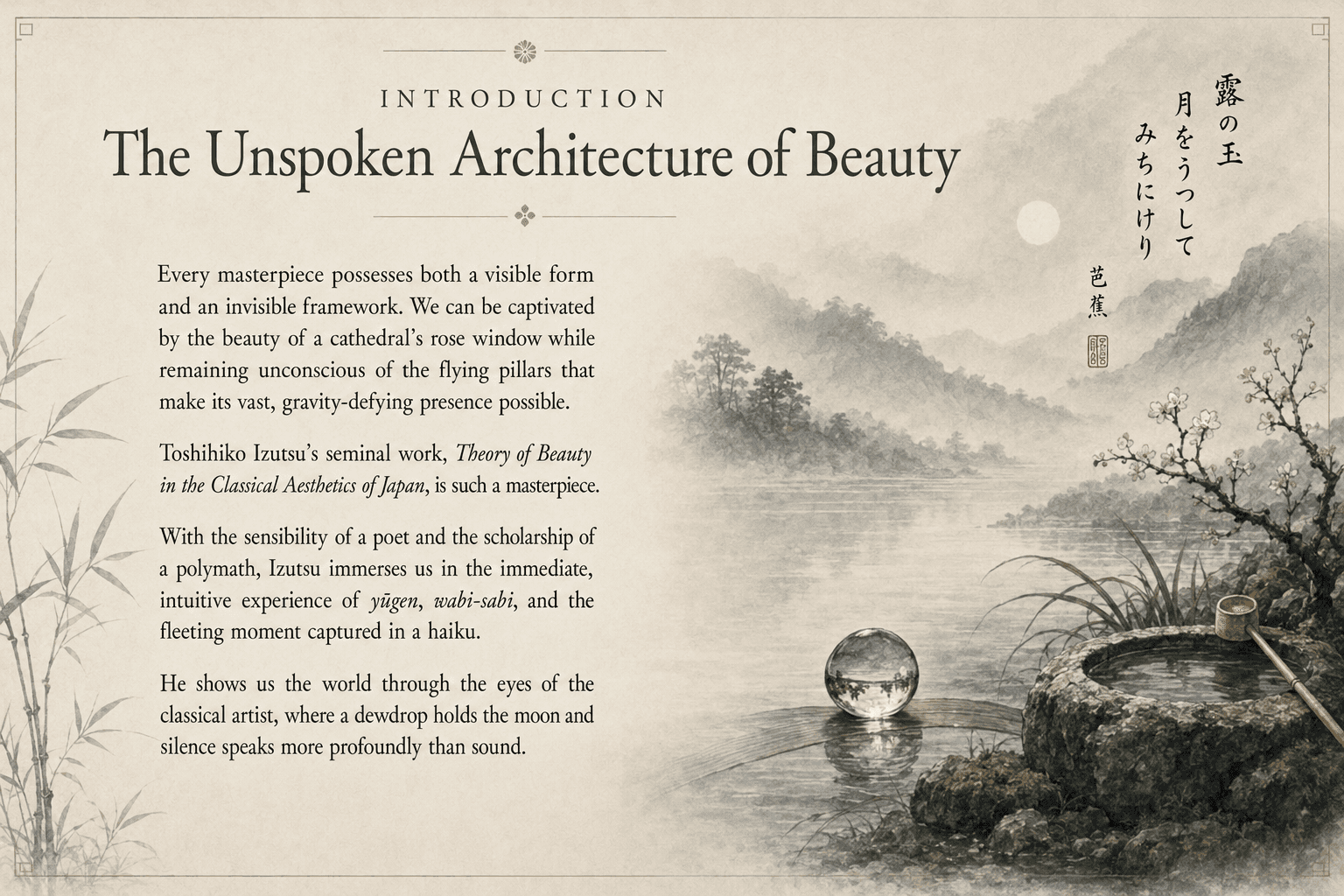
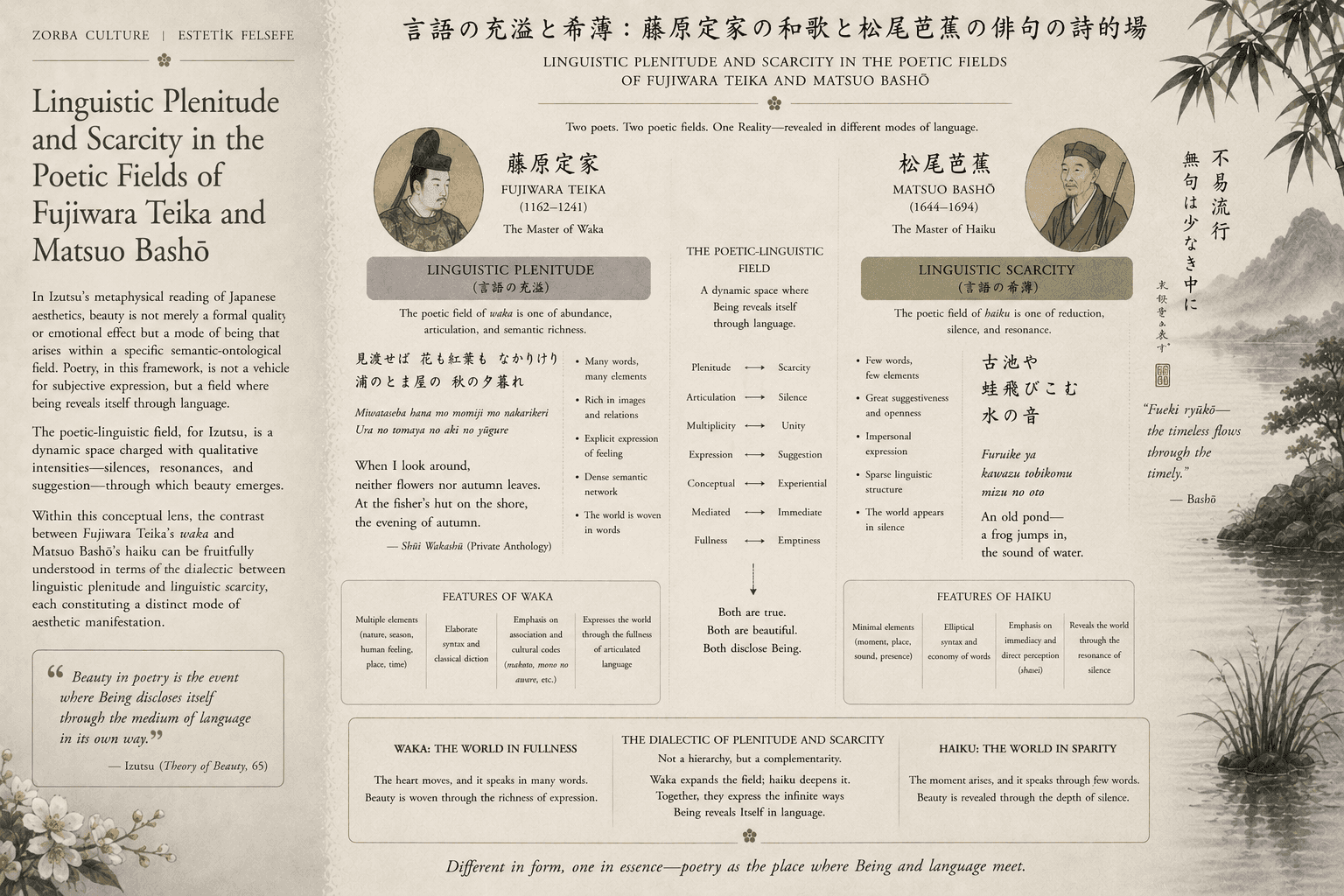
Synopsys: Toshihiko Izutsu’s seminal Theory of Beauty in the Classical Aesthetics of Japan masterfully maps the phenomenological terrain of Japanese aesthetic experience. Yet, his project operates primarily on the level of the given—the what and how of beauty—while leaving its ultimate ontological why as an implicit resonance. This article argues that the systematic philosophy of Kitarō Nishida, founder of the Kyoto School, supplies this essential missing foundation. It demonstrates that Nishida’s revolutionary “topological turn”—his reconfiguration of reality as a dynamic, nested series of fields of implacement (basho), culminating in the “field of true nothing” (zettai mu no basho)—provides the precise metaphysical ground that makes the non-dual aesthetic encounters described by Izutsu possible. This thesis is proven through a focused analysis of Izutsu’s phenomenology of the haiku as a “cognitive-existential field.” The article concludes that the synthesis of Nishida and Izutsu reveals Japanese aesthetics not as a mere collection of sensibilities, but as a rigorous, lived ontology, offering a vital non-dual framework for contemporary thought.